Today
When you are living through one of the wettest summers since about 1759, it helps to look at the advantages. One of those is that flaws in a building quickly become apparent. So, while we still have builders in the house, we could ask them to check out the damp patch appearing on our newly decorated sitting room wall. The trouble, it seems, is from an ill-fitting seal on the balcony above and will be remedied by our talented builder.
In My Day
In 2000 or thereabouts we decided to extend 7 Mead Close in the only possible way - upwards. We looked around and selected a local builder who came up with an attractive design, including gable, that maximised the available space. That summer was fairly dry, although cold, and work started briskly.
We endured weeks of "radio wars" with several builders all playing their radios simultaneously on different stations, and coped with having scaffolding all round the building. It would all be worth it.
After a while we began to notice that work was slowing down. Unknown workers appeared, brought in from agencies, of very variable quality. The builder began to get twitchy about being paid some money. Clearly his business was in trouble and he couldn't afford to keep on his regular staff or sub-contractors.
Eventually, in October, the final touches were put into place. We went to bed that night, relieved to be rid of bodging carpenters, ill-mannered labourers and skip drivers and the encircling scaffolding. That night the wind got up and the rain teemed down all night. The kitchen faced west and received the full brunt.
In the morning I went downstairs to admire the new kitchen, to find water pouring in through the lintel above the window. The paint hung in hammocks , spilling water freely and there was a large damp patch where the extension joined the house. As I stood there, open-mouthed, the builder rang. "Can I come by and get my final payment?" he asked. "Well, when you've sorted out all this water that's pouring into my kitchen," I replied.
He came over and assessed the problem. It seems that the incompetent jobbing brickies had inserted the lintel porous side out and had not correctly fitted the flashing between the extension and main house. Out came the window and the whole front had to be redone. When the plasterer turned up he said "I only came because I knew it was you - I haven't been paid for the past three jobs I've done for this company."
Eventually building control came and signed off the job and we paid our builder. Without the rain we might never have noticed until he was a distant spot on the horizon.
Even so, I wouldn't mind finding out what might happen after a long dry spell.
Wednesday, August 29, 2012


Sunday, August 26, 2012
Changing Places
Today
The other day I received a lovely email from my Honduran cousin Ernesto, in response to my change of address notification. We'd had such a lovely time visiting my cousins in Honduras this Spring and this was the first time I'd met most of them. "Don't leave it another sixty years", said Ernesto.
Now, Honduras is a third world country and isn't exactly a popular destination for European settlers, so how did I come to have first cousins living in Tegucigalpa?
In My Day
My German mother was born in 1913 to an Aryan mother and Jewish father. She had two older brothers, Heinrich (Heine) and Ernst and a much younger sister Maria.
By all accounts she had a comfortable and privileged childhood in a village near Hamburg. Her father no longer lived with them but they had plenty of everything - good food, company, culture and education.
In 1933, at nineteen years' old. my mother stood on the brink of of adulthood. She'd matriculated from school and was preparing to enter university where she hoped to study art history, a choice generally reserved for someone who does not expect to face poverty or difficulty.
Also in 1933 Hitler came to power and almost immediately set about dismantling opportunities for Jews and part-Jews. As a result Mamma was barred from engaging in any kind of higher education and her opportunities quickly dwindled to those of manual labourer or domestic servant.
As the situation became worse, she, her brothers and many other Jews and part-Jews who were able to, left Germany. Mamma was following a boyfriend Heinz (was he a chef? I dimly remember her telling me this) who had escaped to the US. She came to England with her English employers, but never left, probably being trapped by the outbreak of WWII.
Heine and Ernst happened to have friends in Guatemala so going there seemed the easiest thing to do. It must have been a long journey by several boats to arrive in a place so different from Europe where little German was spoken and where all your hard-won skills were useless. There Ernst met a Honduran woman (very beautiful, judging by the pictures) married her and settled in Honduras where he had five children and worked for a pharmaceutical company in Tegucigalpa. It was clear that he relied for quite a while on the international brotherhood of Jews who will help their own.
(Heine, although he, too, married locally, later returned to Berlin where his family still lives).
Mamma never saw Ernst again, although they did write to each other.
Their story is matched in many ways by others in the whole history of humanity who have been forced to leave their home by war, hunger or persecution. For some the result was disastrous, for others the key to success. But for all of them it's a terrifying choice, born of desperation, and we should never forget that when considering the position of newcomers into our own country.
I feel sure that if Mamma and Ernst were alive today they would have been delighted at our cousinly meeting. And, no, Ernesto, I'll try not to leave it another sixty years.
The other day I received a lovely email from my Honduran cousin Ernesto, in response to my change of address notification. We'd had such a lovely time visiting my cousins in Honduras this Spring and this was the first time I'd met most of them. "Don't leave it another sixty years", said Ernesto.
Now, Honduras is a third world country and isn't exactly a popular destination for European settlers, so how did I come to have first cousins living in Tegucigalpa?
In My Day
My German mother was born in 1913 to an Aryan mother and Jewish father. She had two older brothers, Heinrich (Heine) and Ernst and a much younger sister Maria.
By all accounts she had a comfortable and privileged childhood in a village near Hamburg. Her father no longer lived with them but they had plenty of everything - good food, company, culture and education.
In 1933, at nineteen years' old. my mother stood on the brink of of adulthood. She'd matriculated from school and was preparing to enter university where she hoped to study art history, a choice generally reserved for someone who does not expect to face poverty or difficulty.
Also in 1933 Hitler came to power and almost immediately set about dismantling opportunities for Jews and part-Jews. As a result Mamma was barred from engaging in any kind of higher education and her opportunities quickly dwindled to those of manual labourer or domestic servant.
As the situation became worse, she, her brothers and many other Jews and part-Jews who were able to, left Germany. Mamma was following a boyfriend Heinz (was he a chef? I dimly remember her telling me this) who had escaped to the US. She came to England with her English employers, but never left, probably being trapped by the outbreak of WWII.
Heine and Ernst happened to have friends in Guatemala so going there seemed the easiest thing to do. It must have been a long journey by several boats to arrive in a place so different from Europe where little German was spoken and where all your hard-won skills were useless. There Ernst met a Honduran woman (very beautiful, judging by the pictures) married her and settled in Honduras where he had five children and worked for a pharmaceutical company in Tegucigalpa. It was clear that he relied for quite a while on the international brotherhood of Jews who will help their own.
(Heine, although he, too, married locally, later returned to Berlin where his family still lives).
Mamma never saw Ernst again, although they did write to each other.
Their story is matched in many ways by others in the whole history of humanity who have been forced to leave their home by war, hunger or persecution. For some the result was disastrous, for others the key to success. But for all of them it's a terrifying choice, born of desperation, and we should never forget that when considering the position of newcomers into our own country.
I feel sure that if Mamma and Ernst were alive today they would have been delighted at our cousinly meeting. And, no, Ernesto, I'll try not to leave it another sixty years.
Sunday, August 19, 2012
Glory Hole
Today
One of the reasons we bought Spencer House is to be able to bring the Bentley in out of the rain. We can also put the E-Class away.
So we are working very hard, shifting the boxes out of the garage into their right places. When you talk to people or look around you realise that very few folk actually put their cars into their garages; preferring to use them as dumping grounds for everything they haven't the room for indoors or in lieu of a shed.
In My Day
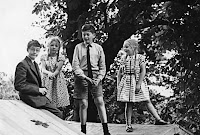 There were, if I remember correctly, two garages at 4BH. they were wooden structures with pitched roofs and double doors. there was one either side of the house, set back well from the road. As we generally didn't have a car (except for our brief fling with Douglas the Daimler), they clearly didn't house motor vehicles. In fact, I can't remember what was in them. Not garden equipment as that was either in the basement "garden room" or the shed.
The shed was also a pitched roof structure, built laterally against the rear of the garage at the top of the slope. This meant that the slope of the roof ended on one side against the wall of the garage.
At some point in our lives we thought that it would be a good idea to play on this roof. You scrambled up onto the shed roof and once up there you could slide down the slope, clamber over the garage, take up a picnic - anything. Mamma and Daddy didn't seem at all worried for our safety and I actually don't think there were any accidents.
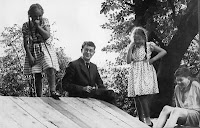 Looking st these pictures reminds me how we girls wore dresses to play in and the boys shirt, ties and jackets. the picture was clearly posed as we all seem uncertain as to what act to put on the for the camera. But we did play on the garage and shed roofs pretty often, although I was, as usual, slightly at variance with the prevailing mood, being afraid
a) of the dangers b) of getting my dress dirty.
Anyway, I am looking forward to being the proud owner of a garage that actually houses cars.
One of the reasons we bought Spencer House is to be able to bring the Bentley in out of the rain. We can also put the E-Class away.
So we are working very hard, shifting the boxes out of the garage into their right places. When you talk to people or look around you realise that very few folk actually put their cars into their garages; preferring to use them as dumping grounds for everything they haven't the room for indoors or in lieu of a shed.
In My Day
 There were, if I remember correctly, two garages at 4BH. they were wooden structures with pitched roofs and double doors. there was one either side of the house, set back well from the road. As we generally didn't have a car (except for our brief fling with Douglas the Daimler), they clearly didn't house motor vehicles. In fact, I can't remember what was in them. Not garden equipment as that was either in the basement "garden room" or the shed.
The shed was also a pitched roof structure, built laterally against the rear of the garage at the top of the slope. This meant that the slope of the roof ended on one side against the wall of the garage.
At some point in our lives we thought that it would be a good idea to play on this roof. You scrambled up onto the shed roof and once up there you could slide down the slope, clamber over the garage, take up a picnic - anything. Mamma and Daddy didn't seem at all worried for our safety and I actually don't think there were any accidents.
 Looking st these pictures reminds me how we girls wore dresses to play in and the boys shirt, ties and jackets. the picture was clearly posed as we all seem uncertain as to what act to put on the for the camera. But we did play on the garage and shed roofs pretty often, although I was, as usual, slightly at variance with the prevailing mood, being afraid
a) of the dangers b) of getting my dress dirty.
Anyway, I am looking forward to being the proud owner of a garage that actually houses cars.
Saturday, August 18, 2012
Ice Music
Today
After a long day, organising yet more stuff at Spencer House, we are relaxing with some Sancerre Rose and Sigur Ros. Lovely, swimmy music which is truly relaxing me.
In My Day
Was it about 2002? We were in London and decided to catch a ballet performance by the Merce Cunningham Dance Company at the Queen Elizabeth Hall. Becky joined us for this (it was only much later that I discovered what an aversion she has to Avant-garde ballet.)
 For the second piece, Merce Cunningham came on stage with his lighting, costume and set directors and his choreographer. He announced that they would draw from a hat to determine which combination of two lighting and stage sets, costumes, choreography and music would form the performance, giving quite a random result. Music would either be by Radiohead or Sigur Ros, an Icelandic band. I knew of Radiohead but had never heard of Sigur Ros so had no idea of what kind of sound world would be involved.

The result, which was fabulously beautiful to my and Paul's eyes (altho' not to Becky who was rather bored) included the Sigur Ros music. The dancers managed to be silent on their bare feet and the images of their beautiful shapes against the swirling backdrop and mysterious Sigur Ros music set the bar for fabulous modern dance, as far as I was concerned.
Merce Cunningham died in 2009, a real loss to the art world; but he changed my heart forever.
After a long day, organising yet more stuff at Spencer House, we are relaxing with some Sancerre Rose and Sigur Ros. Lovely, swimmy music which is truly relaxing me.
In My Day
Was it about 2002? We were in London and decided to catch a ballet performance by the Merce Cunningham Dance Company at the Queen Elizabeth Hall. Becky joined us for this (it was only much later that I discovered what an aversion she has to Avant-garde ballet.)
 For the second piece, Merce Cunningham came on stage with his lighting, costume and set directors and his choreographer. He announced that they would draw from a hat to determine which combination of two lighting and stage sets, costumes, choreography and music would form the performance, giving quite a random result. Music would either be by Radiohead or Sigur Ros, an Icelandic band. I knew of Radiohead but had never heard of Sigur Ros so had no idea of what kind of sound world would be involved.
The result, which was fabulously beautiful to my and Paul's eyes (altho' not to Becky who was rather bored) included the Sigur Ros music. The dancers managed to be silent on their bare feet and the images of their beautiful shapes against the swirling backdrop and mysterious Sigur Ros music set the bar for fabulous modern dance, as far as I was concerned.
Merce Cunningham died in 2009, a real loss to the art world; but he changed my heart forever.
Friday, August 17, 2012
"They've Paved Paradise and Put up a Parking Lot"
Today
There seems to be some kind of law that, having driven past your destination, finding there are no parking spaces, you pay for an hour's parking when you are unlikely to be more than ten minutes and walk back to find that in your absence an enormous parking space has become available right outside.
This happened to me in Wells today and started a train of thought about how we attach significance to the most random occurences.
In My Day
When we lived at Montfort Close, in 1984, one of our neighbours, was an exceedingly large lady named Kate with a daughter about the same age as Becky. Naturally, we became friendly and for a while saw a lot of each other.
She was a very deeply religious person, regularly attending church. Her view of God was personal to an absurd degree and we soon coined a name for this: "The God of the parking space". She seemed genuinely to believe that if she drove into Eastbourne on a crowded Saturday afternoon and prayed very hard, that God would find her a parking space. How this would work if there were more people praying for a space that there were spaces available, was never made clear. Pretty harmless, you might say, but Kate coupled this with a tendency to talk about black South African natives in a tone of disgust as "Kaffirs" and thought nothing of trying cruelly to drive a wedge between Liz and Becky.
Then there was a friend of Paul's Mother who, faced with uncertainty about her accommodation, said that God had visited her and told her to build a loft conversion, which I guess is something anyone could work out with a modicum of common sense.
Now, as far as I'm concerned, the jury's out on whether there's a god or not, but a belief in a God who deals in parking spaces and loft extensions, while ignoring bigger issues such as cruelty or racial discrimination, smacks more of stone-age paganism than well-grounded spiritual understanding.
Although it might be interesting to discover if there is a statistical correlation between their belief and success at parking.
There seems to be some kind of law that, having driven past your destination, finding there are no parking spaces, you pay for an hour's parking when you are unlikely to be more than ten minutes and walk back to find that in your absence an enormous parking space has become available right outside.
This happened to me in Wells today and started a train of thought about how we attach significance to the most random occurences.
In My Day
When we lived at Montfort Close, in 1984, one of our neighbours, was an exceedingly large lady named Kate with a daughter about the same age as Becky. Naturally, we became friendly and for a while saw a lot of each other.
She was a very deeply religious person, regularly attending church. Her view of God was personal to an absurd degree and we soon coined a name for this: "The God of the parking space". She seemed genuinely to believe that if she drove into Eastbourne on a crowded Saturday afternoon and prayed very hard, that God would find her a parking space. How this would work if there were more people praying for a space that there were spaces available, was never made clear. Pretty harmless, you might say, but Kate coupled this with a tendency to talk about black South African natives in a tone of disgust as "Kaffirs" and thought nothing of trying cruelly to drive a wedge between Liz and Becky.
Then there was a friend of Paul's Mother who, faced with uncertainty about her accommodation, said that God had visited her and told her to build a loft conversion, which I guess is something anyone could work out with a modicum of common sense.
Now, as far as I'm concerned, the jury's out on whether there's a god or not, but a belief in a God who deals in parking spaces and loft extensions, while ignoring bigger issues such as cruelty or racial discrimination, smacks more of stone-age paganism than well-grounded spiritual understanding.
Although it might be interesting to discover if there is a statistical correlation between their belief and success at parking.
Friday, August 03, 2012
Itchy and Scratchy
Today
After a dismally cold and wet June and July, last week suddenly perked up, giving us warm and beautiful weather.
Unfortunately, the insects also perked up, deciding to seize the carpe diem and get on with what they do best- multiplying. In Lizzie's four-cat household this unfortunately meant fleas. From forgotten corners these beasts leapt up in their thousands, biting all mortal flesh in their paths.
Liz and Wesz went on the offensive with flea bombs, vacuuming, spraying. The cats were not just given one treatment each; the "Frontline" drops clearly not having been up to the task of stemming the tide. So, the cats were sprayed, squirted, combed and bathed.
"They really show their personalities when confronted with the bathing", said Lizzie.
I bet they do.
In My Day
 When we lived at Rowan Avenue, back in 1977, our usual supply of two cats was augmented by another two. Beatrice's marriage break-up had left her with nowhere to house her two cats for the time being. Thus Pickles and Algernon came to join us. The cats seemed to rub along OK, though Pickles was a bit of a loner.
But we ran into the same problem as Lizzie; a massive flea infestation hit the house. There wasn't the same array of sprays, drops and inoculation available and we seemed to be relying on powder. This simply didn't penetrate Pickles' dense orange fluff so the fleas continued. I talked to a friend about it. "Bathe them in vinegar," she advised airily. I was unsure about this and asked the vet. "Well, if you're going to bathe cats," the receptionist said guardedly "we do a special anti-flea shampoo." I bought a large quantity and set off home.
Finally the wily Algernon; he allowed us to pick him up and place him in the water. His plan was clear: he was going to let us drop our guard so he could make a dash for it. Unfortunately for him, he couldn't disguise the slight tensing of his muscles as he prepared for flight. I tightened my grip around his chest and the job was done. The four miserable creatures looked at each other and wandered off. We did clear up the fleas, though.
These days we use the "Program" bi-annual injection system which ensures that fleas can't breed, and we never see one. As I point out to Abby when taking her for her jabs, she's forgotten how being eaten alive by fleas feels or she'd be more grateful.
After a dismally cold and wet June and July, last week suddenly perked up, giving us warm and beautiful weather.
Unfortunately, the insects also perked up, deciding to seize the carpe diem and get on with what they do best- multiplying. In Lizzie's four-cat household this unfortunately meant fleas. From forgotten corners these beasts leapt up in their thousands, biting all mortal flesh in their paths.
Liz and Wesz went on the offensive with flea bombs, vacuuming, spraying. The cats were not just given one treatment each; the "Frontline" drops clearly not having been up to the task of stemming the tide. So, the cats were sprayed, squirted, combed and bathed.
"They really show their personalities when confronted with the bathing", said Lizzie.
I bet they do.
In My Day
 When we lived at Rowan Avenue, back in 1977, our usual supply of two cats was augmented by another two. Beatrice's marriage break-up had left her with nowhere to house her two cats for the time being. Thus Pickles and Algernon came to join us. The cats seemed to rub along OK, though Pickles was a bit of a loner.
But we ran into the same problem as Lizzie; a massive flea infestation hit the house. There wasn't the same array of sprays, drops and inoculation available and we seemed to be relying on powder. This simply didn't penetrate Pickles' dense orange fluff so the fleas continued. I talked to a friend about it. "Bathe them in vinegar," she advised airily. I was unsure about this and asked the vet. "Well, if you're going to bathe cats," the receptionist said guardedly "we do a special anti-flea shampoo." I bought a large quantity and set off home.
- Rule number one: as it says on the IKEA assembly instructions, it is advisory to be two persons.
- Rule number two: don't let the still unbathed cats see what you're up to, or they'll disappear for a fortnight.
- Rule number three: figure out how you're going to get them dry afterwards - some cats become homidical at the sound of a hairdryer.
- Rule number four: know your cats; that way, you'll be one step ahead.
Finally the wily Algernon; he allowed us to pick him up and place him in the water. His plan was clear: he was going to let us drop our guard so he could make a dash for it. Unfortunately for him, he couldn't disguise the slight tensing of his muscles as he prepared for flight. I tightened my grip around his chest and the job was done. The four miserable creatures looked at each other and wandered off. We did clear up the fleas, though.
These days we use the "Program" bi-annual injection system which ensures that fleas can't breed, and we never see one. As I point out to Abby when taking her for her jabs, she's forgotten how being eaten alive by fleas feels or she'd be more grateful.
Thursday, August 02, 2012
Donner und Blitzen
Today
It seems that the better our weather forecasting technology is, the more the forecast changes. Yesterday's forecast for today in this area showed thunderstorms. Today, there's no sign of this prediction, just more rain. "They're always doing that", I grumbled to Paul. "I haven't had a good thunderstorm for years."
In My Day
As a child I was terrified of thunderstorms and it seemed that we had a good few in 1950s London. Hot and sticky days would reach a climax with heavy mauve clouds filling the sky. Probably my older brothers had filled my head with tales of people being struck by lightning and given me useful advice about not sheltering under trees (how could I avoid it when the entire garden was filled with huge trees?) and wearing (or was it not wearing?) rubber-soled shoes, so I was primed for fear.
Often the storm would start in the middle of the night. I'd wake, transfixed with terror as the first rumble sounded. As it approached our location I would make the decision. Just about the only thing that would induce me to venture out into our ghost-filled house at night was a storm. Straight into my parents' bedroom I'd go and climb into their bed. They slept at that time on 2 beds pushed together and I would crawl into the "crack" in the middle and lie there, still afraid but also comforted, until the last rumble died away. I would watch bolts of lightning strike the lawn and listen, trembling, as the thunder cracked around. Mamma and Daddy offered me no especial attention; they just made room for me and then went on sleeping.
One evening, I guess I was about ten, there was an enormous storm. Daddy was in charge, Mamma being at the Proms, and he decided to switch out the lights and stand with us to watch the storm. He taught us how to estimate the distance of the storm by counting the number of seconds between flash and rumble (five for one mile apparently, and calculated by saying "one, Dulwich College, two Dulwich College" and so on to ensure the second was given full value).
Encircled by my family, I somehow lost my fear and began to enjoy the spectacle.
There is still much rubbish talked about storms; one of my favourite being a remark by Paul's Mum "You mustn't run during a storm; it's the most dangerous thing you can do." As though the storm was a malevolent beast chasing you down the street.
Thunderstorms seem rarer these days and I rather miss them.
It seems that the better our weather forecasting technology is, the more the forecast changes. Yesterday's forecast for today in this area showed thunderstorms. Today, there's no sign of this prediction, just more rain. "They're always doing that", I grumbled to Paul. "I haven't had a good thunderstorm for years."
In My Day
As a child I was terrified of thunderstorms and it seemed that we had a good few in 1950s London. Hot and sticky days would reach a climax with heavy mauve clouds filling the sky. Probably my older brothers had filled my head with tales of people being struck by lightning and given me useful advice about not sheltering under trees (how could I avoid it when the entire garden was filled with huge trees?) and wearing (or was it not wearing?) rubber-soled shoes, so I was primed for fear.
Often the storm would start in the middle of the night. I'd wake, transfixed with terror as the first rumble sounded. As it approached our location I would make the decision. Just about the only thing that would induce me to venture out into our ghost-filled house at night was a storm. Straight into my parents' bedroom I'd go and climb into their bed. They slept at that time on 2 beds pushed together and I would crawl into the "crack" in the middle and lie there, still afraid but also comforted, until the last rumble died away. I would watch bolts of lightning strike the lawn and listen, trembling, as the thunder cracked around. Mamma and Daddy offered me no especial attention; they just made room for me and then went on sleeping.
One evening, I guess I was about ten, there was an enormous storm. Daddy was in charge, Mamma being at the Proms, and he decided to switch out the lights and stand with us to watch the storm. He taught us how to estimate the distance of the storm by counting the number of seconds between flash and rumble (five for one mile apparently, and calculated by saying "one, Dulwich College, two Dulwich College" and so on to ensure the second was given full value).
Encircled by my family, I somehow lost my fear and began to enjoy the spectacle.
There is still much rubbish talked about storms; one of my favourite being a remark by Paul's Mum "You mustn't run during a storm; it's the most dangerous thing you can do." As though the storm was a malevolent beast chasing you down the street.
Thunderstorms seem rarer these days and I rather miss them.
Thursday, July 19, 2012
Heart of the Home
Today
At last I have a definite date for the fitting of my new kitchen. I've a space 3X6m to play with and am looking forward to finding homes for all my kitchen stuff. And I have to find space for the washer-dryer, dishwasher, microwave, fridge-freezer and bread-maker.
Most people with whom I discuss this are full of enthusiasm. "Most important," they say. "The kitchen's the heart of the home."
In My Day
Given that 4Bh was a twenty-roomed four-storey Victorian mansion, I wonder why my parents chose to use as a kitchen a space very little larger than a cupboard.
Access to the front door was up a substantial flight of steps, through a glazed porch into a very graceful octagonal hall. The kitchen was a tiny room to the left. I'm not even sure that it had a door; maybe just a curtain.
There was access to a back porch at the head of precipitous steps leading down to the back garden and another sliding door that gave directly onto a toilet. Daddy was convinced that having a toilet leading straight off the kitchen was illegal in some way and we were charged not to divulge its location to any non-family member.
In between was the kitchen. There was a gas cooker (I seem to remember Mamma acquiring a Cannon cooker later on, which had a very new-fangled "eye-level" grill). This was tucked in to the right of the entrance.
On the other side of the back porch door was a diminutive worktop with open shelves beneath which housed saucepans. Then there was a sink with wooden draining board and some more shelves tucked up on the left.
There was also a small folding table grandly called the "kitchen table" which I suppose it was but no meals were ever taken there.
Hot water was supplied by a gas heater which was rather tricky to use.
There was no fridge, washing machine or dishwasher. All cooking and washing (except of sheets which were washed in the bath or sent to the laundry) was done in this space.
Somehow in this dark, small and inconvenient space Mamma managed to produce daily fresh-cooked meals, roast Sunday lunches, elaborate Christmas dinners, birthday cakes of all kinds, an array of mouth-watering German cakes and biscuits, bottle fruit, make jam and cream cheese.
Much later a washing machine, spin-dryer and fridge were all acquired. Accommodating them necessitated the knocking through of an "alcove" into the octagonal hall.
Now that would be considered illegal nowadays.
At last I have a definite date for the fitting of my new kitchen. I've a space 3X6m to play with and am looking forward to finding homes for all my kitchen stuff. And I have to find space for the washer-dryer, dishwasher, microwave, fridge-freezer and bread-maker.
Most people with whom I discuss this are full of enthusiasm. "Most important," they say. "The kitchen's the heart of the home."
In My Day
Given that 4Bh was a twenty-roomed four-storey Victorian mansion, I wonder why my parents chose to use as a kitchen a space very little larger than a cupboard.
Access to the front door was up a substantial flight of steps, through a glazed porch into a very graceful octagonal hall. The kitchen was a tiny room to the left. I'm not even sure that it had a door; maybe just a curtain.
There was access to a back porch at the head of precipitous steps leading down to the back garden and another sliding door that gave directly onto a toilet. Daddy was convinced that having a toilet leading straight off the kitchen was illegal in some way and we were charged not to divulge its location to any non-family member.
In between was the kitchen. There was a gas cooker (I seem to remember Mamma acquiring a Cannon cooker later on, which had a very new-fangled "eye-level" grill). This was tucked in to the right of the entrance.
On the other side of the back porch door was a diminutive worktop with open shelves beneath which housed saucepans. Then there was a sink with wooden draining board and some more shelves tucked up on the left.
There was also a small folding table grandly called the "kitchen table" which I suppose it was but no meals were ever taken there.
Hot water was supplied by a gas heater which was rather tricky to use.
There was no fridge, washing machine or dishwasher. All cooking and washing (except of sheets which were washed in the bath or sent to the laundry) was done in this space.
Somehow in this dark, small and inconvenient space Mamma managed to produce daily fresh-cooked meals, roast Sunday lunches, elaborate Christmas dinners, birthday cakes of all kinds, an array of mouth-watering German cakes and biscuits, bottle fruit, make jam and cream cheese.
Much later a washing machine, spin-dryer and fridge were all acquired. Accommodating them necessitated the knocking through of an "alcove" into the octagonal hall.
Now that would be considered illegal nowadays.
Wednesday, July 18, 2012
Toadie
Today
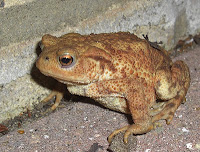
Engaged in the somewhat Sisyphean process of digging up the roots of our Bamboo yesterday, Wesz dislodged a toad. The toad tried hard to get back into what it clearly perceived as a safe, cool & moist place to relax. Eventually, Wesz eased it onto the edge of his spade and popped it under the Red Cedar, from where it swam across the stream to find (I hope) a more permanent home.
"Paul thinks that toads are such gentlemen" I said to Wesz.
In My Day
My first experience with what I positively knew to be a toad was in Mead Close back in the hot summer of 1989. The weather had been pretty dry for some weeks and I was in the habit of pottering out into the garden in the gloaming. One evening, enjoying the stillness, I suddenly heard rustling. Investigation showed a small toad perched near the wall. I called Paul and the girls. Paul picked up the toad (how does he do that?) and we all crowded to look. It was a very dull brown and very warty.
Having spent much of that summer waging war on slugs, I greeted the toad's presence in the garden warmly. Lizzie named him Telemachus and he became a more or less permanent addition.
Over the years we have seen many toads in the garden. One year our somewhat flighty neighbour knocked on the door. "Can you tell me," she asked breathlessly "Do toads carry their young on their backs?" "Well", I replied "I think they lay spawn like frogs, but the male of the species is much smaller than the female...."
She was horrified and refused to go back into her garden unless the toads were removed. This Paul did, gently lifting up the couple, who were locked in an embrace and didn't seem to notice they were being moved. So they also became welcome guests in our garden.
So, greetings, Mr Toad. Although your habit of pee-ing on the hands of whoever picks you up is far from gentlemanly, in my opinion.

Engaged in the somewhat Sisyphean process of digging up the roots of our Bamboo yesterday, Wesz dislodged a toad. The toad tried hard to get back into what it clearly perceived as a safe, cool & moist place to relax. Eventually, Wesz eased it onto the edge of his spade and popped it under the Red Cedar, from where it swam across the stream to find (I hope) a more permanent home.
"Paul thinks that toads are such gentlemen" I said to Wesz.
In My Day
My first experience with what I positively knew to be a toad was in Mead Close back in the hot summer of 1989. The weather had been pretty dry for some weeks and I was in the habit of pottering out into the garden in the gloaming. One evening, enjoying the stillness, I suddenly heard rustling. Investigation showed a small toad perched near the wall. I called Paul and the girls. Paul picked up the toad (how does he do that?) and we all crowded to look. It was a very dull brown and very warty.
Having spent much of that summer waging war on slugs, I greeted the toad's presence in the garden warmly. Lizzie named him Telemachus and he became a more or less permanent addition.
Over the years we have seen many toads in the garden. One year our somewhat flighty neighbour knocked on the door. "Can you tell me," she asked breathlessly "Do toads carry their young on their backs?" "Well", I replied "I think they lay spawn like frogs, but the male of the species is much smaller than the female...."
She was horrified and refused to go back into her garden unless the toads were removed. This Paul did, gently lifting up the couple, who were locked in an embrace and didn't seem to notice they were being moved. So they also became welcome guests in our garden.
So, greetings, Mr Toad. Although your habit of pee-ing on the hands of whoever picks you up is far from gentlemanly, in my opinion.
Tuesday, July 17, 2012
War Hero
Today
On Saturday my choir gave a concert of a mixed programme of 17th and 20th century pieces.
Two of the 20th century pieces were setting of poems by, respectively, Edmund Blunden and James Kirkup. There was a curious connection between them. Blunden was a bona fide war poet; he fought in the trenches, knew Siegfried Sassoon and his poetry won much acclaim. Kirkup, by contrast, was a conscientious objector during the First World War.
"Like my Father," I commented to our Music Director.
In My Day
The story of how Daddy was a conscientious objector at the time of conscription during the 1914-18 war was often told in my family. Daddy would describe how he went to court and said "Fight your own bloody war". For which act of defiance he was sent to prison for the duration.
He was imprisoned for about three years, much of it solitary, and he talked about how the experience gave him a lasting difficulty with authority. He told me how he and his fellow-prisoners decided to hold a labour strike one day. When the morning arrived, Daddy refused to work as had been agreed, only discover that every single other prisoner had backed out of the deal. There was a lot of bitterness in the story and he learnt to trust only himself in future.
He said that on the day of release there were soldiers outside who said "they are the real heroes". I don't know how many people at the time would have agreed; many families lost all their male offspring in the war. I also think that, as time went on, Daddy explored more fully his underlying reasons for objecting. Yes, it wasn't a war he could believe in, but he wasn't ever a pacifist and felt strongly that the Second World War needed to be fought. He was a young and vigorous man, just escaping from a dark and dreary past and now he was being asked to throw away all his opportunities and risk a gruesome death for something that seemed to have nothing to do with him.
So he was disinclined to regard himself as a hero; more of a pragmatist, and for many years I hesitated to tell others his story, not being sure whether he would be regarded as a hero or coward and traitor.
Now, of course, with the passage of years, we can take a less extreme view and I can accept his actions with their mixed motives intact.
On Saturday my choir gave a concert of a mixed programme of 17th and 20th century pieces.
Two of the 20th century pieces were setting of poems by, respectively, Edmund Blunden and James Kirkup. There was a curious connection between them. Blunden was a bona fide war poet; he fought in the trenches, knew Siegfried Sassoon and his poetry won much acclaim. Kirkup, by contrast, was a conscientious objector during the First World War.
"Like my Father," I commented to our Music Director.
In My Day
The story of how Daddy was a conscientious objector at the time of conscription during the 1914-18 war was often told in my family. Daddy would describe how he went to court and said "Fight your own bloody war". For which act of defiance he was sent to prison for the duration.
He was imprisoned for about three years, much of it solitary, and he talked about how the experience gave him a lasting difficulty with authority. He told me how he and his fellow-prisoners decided to hold a labour strike one day. When the morning arrived, Daddy refused to work as had been agreed, only discover that every single other prisoner had backed out of the deal. There was a lot of bitterness in the story and he learnt to trust only himself in future.
He said that on the day of release there were soldiers outside who said "they are the real heroes". I don't know how many people at the time would have agreed; many families lost all their male offspring in the war. I also think that, as time went on, Daddy explored more fully his underlying reasons for objecting. Yes, it wasn't a war he could believe in, but he wasn't ever a pacifist and felt strongly that the Second World War needed to be fought. He was a young and vigorous man, just escaping from a dark and dreary past and now he was being asked to throw away all his opportunities and risk a gruesome death for something that seemed to have nothing to do with him.
So he was disinclined to regard himself as a hero; more of a pragmatist, and for many years I hesitated to tell others his story, not being sure whether he would be regarded as a hero or coward and traitor.
Now, of course, with the passage of years, we can take a less extreme view and I can accept his actions with their mixed motives intact.
Wednesday, July 11, 2012
Ergo
Today
I can quite accept that some people want to paint their walls dull yellow ochre, have a predilection for putting frilly flounces over their blinds or seem to need to put brass picture lights everywhere, even where there were no pictures.
But why anyone would live with a shower screen that's too short and narrow to stop water going over the floor, a kitchen where the sink is placed at the opposite end from the dishwasher or tolerate wardrobe doors whose hinging mechanism obscures over half of the shelf space and whose rail heights are too close together to hang up a jacket or man's shirt is more beyond my comprehension.
"The first is a matter of taste, " I expounded knowledgeably to Paul "the other is ergonomics."
In My Day
7 Mead close was pretty bare when we moved in, back in 1986. There was the rudimentary kitchen that had been put in when the house was built and some half-hearted attempts at wardrobes in the two larger bedrooms.
I surveyed our pile of belongings. How were we going to fit in all our stuff, ourselves, two teenagers, a dog and two cats, let alone find space outside for two cars?
Storage, that was the answer! Over the following years I developed rather a knack of designing really efficient storage. In Becky's tiny room, we dispensed with the door altogether as taking up too much floor space, substituting a curtain, and cannibalised the "Captain's" bed to give her cupboards, a small wardrobe, desk, bed and underbed storage. And this in a room that was barely 2000mm X 2000mm.
Eventually the too small-for-any-car-we-possessed garage had to go, to be replaced with a kitchen that is a miracle of storage. We built a similarly equipped utility room, put fitted wardrobes in the bedrooms and kitted out the upstairs extension as a really functional study/office. By hinging the bathroom door outwards we gained much useful space.
The teapots found a home on some shelves that Paul built high up in the dining room.
Even the dog was tidied away into a kennel which he loved so much we wondered why we hadn't done it years before.
And ergonomics played a big part in the design. I had a shoe cupboard built that was precisely the length of one of Paul's shoes and with shelf heights just right for a pair of high heels. There wasn't a wasted centimetre. Wardrobes had hanging rails exactly designed for trousers, long dresses or jackets.
Unfortunately, even with all this miracle of storage design, we still had too much stuff which is why we had to move. And I now have the challenge of casting my ergonomically trained eye over Spencer House.
But I still can't think where to put the teapots.....
I can quite accept that some people want to paint their walls dull yellow ochre, have a predilection for putting frilly flounces over their blinds or seem to need to put brass picture lights everywhere, even where there were no pictures.
But why anyone would live with a shower screen that's too short and narrow to stop water going over the floor, a kitchen where the sink is placed at the opposite end from the dishwasher or tolerate wardrobe doors whose hinging mechanism obscures over half of the shelf space and whose rail heights are too close together to hang up a jacket or man's shirt is more beyond my comprehension.
"The first is a matter of taste, " I expounded knowledgeably to Paul "the other is ergonomics."
In My Day
7 Mead close was pretty bare when we moved in, back in 1986. There was the rudimentary kitchen that had been put in when the house was built and some half-hearted attempts at wardrobes in the two larger bedrooms.
I surveyed our pile of belongings. How were we going to fit in all our stuff, ourselves, two teenagers, a dog and two cats, let alone find space outside for two cars?
Storage, that was the answer! Over the following years I developed rather a knack of designing really efficient storage. In Becky's tiny room, we dispensed with the door altogether as taking up too much floor space, substituting a curtain, and cannibalised the "Captain's" bed to give her cupboards, a small wardrobe, desk, bed and underbed storage. And this in a room that was barely 2000mm X 2000mm.
Eventually the too small-for-any-car-we-possessed garage had to go, to be replaced with a kitchen that is a miracle of storage. We built a similarly equipped utility room, put fitted wardrobes in the bedrooms and kitted out the upstairs extension as a really functional study/office. By hinging the bathroom door outwards we gained much useful space.
The teapots found a home on some shelves that Paul built high up in the dining room.
Even the dog was tidied away into a kennel which he loved so much we wondered why we hadn't done it years before.
And ergonomics played a big part in the design. I had a shoe cupboard built that was precisely the length of one of Paul's shoes and with shelf heights just right for a pair of high heels. There wasn't a wasted centimetre. Wardrobes had hanging rails exactly designed for trousers, long dresses or jackets.
Unfortunately, even with all this miracle of storage design, we still had too much stuff which is why we had to move. And I now have the challenge of casting my ergonomically trained eye over Spencer House.
But I still can't think where to put the teapots.....
Sunday, July 08, 2012
Pond Life
Today
One of the mixed blessings of Spencer House is the acquisition of an ornamental stream and Victorian lake.We share the lake with our neighbours but both are charged with the duty of preserving its antique loveliness.
Quite how we are supposed to do this with overgrown rhododendrons, ubiquitous duckweed and the unrelenting rain, I'm not sure.
These waters are, of course, full of life; some kind of carp swim around hopelessly and I'm sure I've seen leeches. The barrowloads of duckweed I remove are full of tiny crayfish, water beetles and water boatmen. One insect, I feel sure, was preparing to become a dragonfly.
And there are thousands of tadpoles. A close-up view suggests not only frogs but also newts might emerge from these creatures - we just need some warmer weather to help them along.
In My Day
When I was a child tadpoles were at the heart of learning about how life develops from the egg. Even in London it was fairly easy to find a bit of water, maybe a puddle in a bombed site, that was full of frog spawn.
Teachers just loved this practical lesson, You could see so clearly the eggs in the translucent spawn. As you watched these hatched into tiny, black, wriggling tadpoles. They had long tails to help them wriggle along and no legs.
As the days went by you watched, fascinated, as legs appeared and the tails got shorter. You could see each stage of the progress towards being a frog. Since the similar progress in human development is hidden deep within the body this was very exciting.
Eventually, your tadpoles became frogs and, like all children, embraced their maturity by leaping out of the water into adult life, never to be seen again.
We have been told that there are sometimes also ducklings on the lake, but this year we have only seen two rather lonely-looking drakes.
One of the mixed blessings of Spencer House is the acquisition of an ornamental stream and Victorian lake.We share the lake with our neighbours but both are charged with the duty of preserving its antique loveliness.
Quite how we are supposed to do this with overgrown rhododendrons, ubiquitous duckweed and the unrelenting rain, I'm not sure.
These waters are, of course, full of life; some kind of carp swim around hopelessly and I'm sure I've seen leeches. The barrowloads of duckweed I remove are full of tiny crayfish, water beetles and water boatmen. One insect, I feel sure, was preparing to become a dragonfly.
And there are thousands of tadpoles. A close-up view suggests not only frogs but also newts might emerge from these creatures - we just need some warmer weather to help them along.
In My Day
When I was a child tadpoles were at the heart of learning about how life develops from the egg. Even in London it was fairly easy to find a bit of water, maybe a puddle in a bombed site, that was full of frog spawn.
Teachers just loved this practical lesson, You could see so clearly the eggs in the translucent spawn. As you watched these hatched into tiny, black, wriggling tadpoles. They had long tails to help them wriggle along and no legs.
As the days went by you watched, fascinated, as legs appeared and the tails got shorter. You could see each stage of the progress towards being a frog. Since the similar progress in human development is hidden deep within the body this was very exciting.
Eventually, your tadpoles became frogs and, like all children, embraced their maturity by leaping out of the water into adult life, never to be seen again.
We have been told that there are sometimes also ducklings on the lake, but this year we have only seen two rather lonely-looking drakes.
Saturday, June 23, 2012
Tight
Today
We decided last night to have a proper Friday night. So I set the posh table with posh crockery etc, assembled the wherewithals for champagne cocktails and changed into a dress.
To complete the look, I put on a nice pair of fine tights, it being far too cold to go bare-legged. As I put them on I found myself thinking about these somewhat frivolous garments and how I first came to wear them.
In My Day
Back in the '50s, of course, women wore stockings. "Nylons" they were generally called. They came to about halfway up your thigh and were held in place with a suspender belt. Mamma bought me my first ever pair of stockings for my first ever date with John Medlock, my first ever boyfriend, when I was thirteen.
I felt very grown-up but quickly came to hate the treachery of this particular garment combination. For one, thing, I had very long legs and the length of stockings was very variable, especially those that I could afford. So it often wasn't until the first one was unravelled and halfway up my leg that I realised that it would only come to just over my knee. Then the suspender had to be stretched to meet it. There were three possible outcomes: the suspenders did their job but the garment itself was pulled down to a place uncomfortably beneath my tummy; the little buttons which held the stocking slipped out of their loop, leaving a stocking on the droop and me hastily trying to do it back up so that no-one could see; the suspender actually broke, leaving me a with a stocking on the droop and a suspender dangling sexily down way past my knees. Safety pins became an essential item in one's purse.
On really bad occasions I simply had to slip into a quiet place and remove the entire lot, which then meant that I was carrying around a broken suspender belt and pair of stockings for the rest of the day.....
Even when all this didn't happen there was still the dangerous possibility that a gust of wind or incautious movement would cause the machinery, so to speak, plus a lot of white thigh to be revealed in an embarrassing place.
In the '60s tights (or "pantyhose" as I believe the Americans still call them) came into the shops. I think I first learnt about them talking to another tall girl at a party who was wearing them. Amazing! An unbroken smooth pale coffee colour from toe to hip. I never looked back!
It is true that cheap tights are still sometimes too short, so that I have to hold them up by wearing knickers on top but they generally keep you covered and warm up the whole length of your leg (how I used to hate that chilly gap with stockings!). And they add that chic finish to one's outfit.
What I can't understand is a) why any sane woman would want to wear stockings and b) why men find stockings and suspenders sexually arousing.
We decided last night to have a proper Friday night. So I set the posh table with posh crockery etc, assembled the wherewithals for champagne cocktails and changed into a dress.
To complete the look, I put on a nice pair of fine tights, it being far too cold to go bare-legged. As I put them on I found myself thinking about these somewhat frivolous garments and how I first came to wear them.
In My Day
Back in the '50s, of course, women wore stockings. "Nylons" they were generally called. They came to about halfway up your thigh and were held in place with a suspender belt. Mamma bought me my first ever pair of stockings for my first ever date with John Medlock, my first ever boyfriend, when I was thirteen.
I felt very grown-up but quickly came to hate the treachery of this particular garment combination. For one, thing, I had very long legs and the length of stockings was very variable, especially those that I could afford. So it often wasn't until the first one was unravelled and halfway up my leg that I realised that it would only come to just over my knee. Then the suspender had to be stretched to meet it. There were three possible outcomes: the suspenders did their job but the garment itself was pulled down to a place uncomfortably beneath my tummy; the little buttons which held the stocking slipped out of their loop, leaving a stocking on the droop and me hastily trying to do it back up so that no-one could see; the suspender actually broke, leaving me a with a stocking on the droop and a suspender dangling sexily down way past my knees. Safety pins became an essential item in one's purse.
On really bad occasions I simply had to slip into a quiet place and remove the entire lot, which then meant that I was carrying around a broken suspender belt and pair of stockings for the rest of the day.....
Even when all this didn't happen there was still the dangerous possibility that a gust of wind or incautious movement would cause the machinery, so to speak, plus a lot of white thigh to be revealed in an embarrassing place.
In the '60s tights (or "pantyhose" as I believe the Americans still call them) came into the shops. I think I first learnt about them talking to another tall girl at a party who was wearing them. Amazing! An unbroken smooth pale coffee colour from toe to hip. I never looked back!
It is true that cheap tights are still sometimes too short, so that I have to hold them up by wearing knickers on top but they generally keep you covered and warm up the whole length of your leg (how I used to hate that chilly gap with stockings!). And they add that chic finish to one's outfit.
What I can't understand is a) why any sane woman would want to wear stockings and b) why men find stockings and suspenders sexually arousing.
Saturday, June 16, 2012
Storing it up
Today
Well, at last it's happened; we've made the move to our new home and are having fun learning about it and all its little quirks.
We have had to fit in stuff both from the flat and the house at 7 Mead Close. Co-ordinating a double move seemed pretty nigh impossible so we first had everything from the Brighton flat put into storage until it could be moved here.
We've also had to put a great deal of our stuff from Stoke into storage until we have proper places for it all. I think that there are about two hundred boxes of various sizes holding all Paul's hobby items, our books, CDs and my teapots.
Paul was wondering about how safe they are "Well," I said "I think that they're probably safer than in the garage here." Really, of course, what he would like is to be reunited with his beloved possessions and he is so looking forward to the day when they will have their own new home.
In My Day
In 1985/6. the move from Eastbourne to Southanpton was managed in fits and starts. We sold the house in Westham in the November but had no home to go to. A kind friend offered us temporary accommodation in Crowborough. This was a fully equipped house, so we decided to put everything in store. "I'm not taking any chances," I said "We'll go for the best there is." Which at that time meant Pickfords. Our belongings, other than clothes, were duly stored.
I don't know how much we missed our stuff; my life was extra hectic as I travelled about the South-East training people how to use computers and I guess what Paul really missed (apart from me) was having a settled home.
After a couple of false starts we were able to move in to the house at Broadlands Road in Southampton in February 1986. It was a bitterly cold morning and snow had fallen. The Pickfords truck arrived and our belongings were somehow stuffed into the house. My view of Pickfords being the best was somewhat altered when one of the removal men cheerfully jumped out of the truck with our precious House of Commons drawing, that had been given to Daddy on his retirement, entirely open to the elements, and holding it just by the string. The glass was cracked too; a great curving line. We noticed and commented on it right away and Pickfords replaced the glass. But to my trained eye there is a slight line across the picture where the broken glass had disturbed the pencil.
I'd love to see my teapots again but, right now, can't think where on earth I'm going to put them!
Well, at last it's happened; we've made the move to our new home and are having fun learning about it and all its little quirks.
We have had to fit in stuff both from the flat and the house at 7 Mead Close. Co-ordinating a double move seemed pretty nigh impossible so we first had everything from the Brighton flat put into storage until it could be moved here.
We've also had to put a great deal of our stuff from Stoke into storage until we have proper places for it all. I think that there are about two hundred boxes of various sizes holding all Paul's hobby items, our books, CDs and my teapots.
Paul was wondering about how safe they are "Well," I said "I think that they're probably safer than in the garage here." Really, of course, what he would like is to be reunited with his beloved possessions and he is so looking forward to the day when they will have their own new home.
In My Day
In 1985/6. the move from Eastbourne to Southanpton was managed in fits and starts. We sold the house in Westham in the November but had no home to go to. A kind friend offered us temporary accommodation in Crowborough. This was a fully equipped house, so we decided to put everything in store. "I'm not taking any chances," I said "We'll go for the best there is." Which at that time meant Pickfords. Our belongings, other than clothes, were duly stored.
I don't know how much we missed our stuff; my life was extra hectic as I travelled about the South-East training people how to use computers and I guess what Paul really missed (apart from me) was having a settled home.
After a couple of false starts we were able to move in to the house at Broadlands Road in Southampton in February 1986. It was a bitterly cold morning and snow had fallen. The Pickfords truck arrived and our belongings were somehow stuffed into the house. My view of Pickfords being the best was somewhat altered when one of the removal men cheerfully jumped out of the truck with our precious House of Commons drawing, that had been given to Daddy on his retirement, entirely open to the elements, and holding it just by the string. The glass was cracked too; a great curving line. We noticed and commented on it right away and Pickfords replaced the glass. But to my trained eye there is a slight line across the picture where the broken glass had disturbed the pencil.
I'd love to see my teapots again but, right now, can't think where on earth I'm going to put them!
Saturday, May 12, 2012
Complete
Today
Yesterday the purchase of Spencer House was completed. Much of the process was invisible to us and was managed by our capable solicitor. His fee of £900 seems cheap at the price. We did have to arrange the financial transfer, but even that was a seamless affair dealt with as a virtual transaction at our local bank branch.
In My Day
When we moved from Rowan Avenue to Montfort Close things were very different. The amount that we could borrow was uncomfortably close to the amount we would make on Rowan Avenue. And there was a mortgage to pay off.

If you added lawyer's fees it all seemed too steep. From somewhere I'd got hold of a book called "The Conveyancing Fraud" The premise of the book was that a huge con was being perpetrated by the British legal system which was that buying and selling a house was a matter for experts and could only be carried out with much obfuscation and the payment of huge fees. The book explained that most houses in England were registered with the Land Registry and poo-pooed the concept of old-fashioned "deeds", especially for new estate-built houses. Finally the book gave a step-by-step guide on how to do it, including telling you what forms you needed.
Simples! I could do all this myself and save a shedload of cash! I buckled down to the task. Naively I was unprepared for the hostility displayed by the solicitors involved.
The vendors' lawyers posed a few sharply written questions (including a trick one), all of which I answered correctly and they stepped down. The estate agent was all affability when I asked them if they would hold the contract deposit for us and the building society's lawyer was cool but OK. Rowan Avenue was subject to a mortgage from the Local Council and the legal department was only too happy to help me.
But the purchasers' solicitors were uncivil, to say the least. When I commented that I couldn't read the writing on their amendments to the contract (I always typed our amendments) I received a letter taking deep offence at the suggestion of illegibility "If you had had your matters attended to professionally the issue would not arise" said the unsigned and undated letter.
And we did it! I insisted on a face-to-face completion on the Rowan Avenue sale, partly to embarrass the rude solicitors. The head of the firm was there and actually apologised in front of the council lawyer who congratulated me on a job well done.
The actual transaction was rather a cliff-hanger as we had to go to the bank to collect the banker's draft for Rowan Avenue, run to our building society's lawyers with the draft and our sums. We were then given another draft with which we ran back to our bank to pay in to make 10 Montfort Close ours. Fortunately, the house at Montfort Close was already empty, but the buyers of 33 Rowan Avenue were right on our tails as we moved ourselves out.
Was it worth it? Well, we saved enough to buy a washing machine, tumble dryer, dishwasher and new three-piece suite. And I have always felt pleased that I actually proved the book right!
These days, solicitors are more cagey about charging exorbitant fees and the fact that I've done it myself does ensure that I know what questions to ask and what really matters.
Yesterday the purchase of Spencer House was completed. Much of the process was invisible to us and was managed by our capable solicitor. His fee of £900 seems cheap at the price. We did have to arrange the financial transfer, but even that was a seamless affair dealt with as a virtual transaction at our local bank branch.
In My Day
When we moved from Rowan Avenue to Montfort Close things were very different. The amount that we could borrow was uncomfortably close to the amount we would make on Rowan Avenue. And there was a mortgage to pay off.

If you added lawyer's fees it all seemed too steep. From somewhere I'd got hold of a book called "The Conveyancing Fraud" The premise of the book was that a huge con was being perpetrated by the British legal system which was that buying and selling a house was a matter for experts and could only be carried out with much obfuscation and the payment of huge fees. The book explained that most houses in England were registered with the Land Registry and poo-pooed the concept of old-fashioned "deeds", especially for new estate-built houses. Finally the book gave a step-by-step guide on how to do it, including telling you what forms you needed.
Simples! I could do all this myself and save a shedload of cash! I buckled down to the task. Naively I was unprepared for the hostility displayed by the solicitors involved.
The vendors' lawyers posed a few sharply written questions (including a trick one), all of which I answered correctly and they stepped down. The estate agent was all affability when I asked them if they would hold the contract deposit for us and the building society's lawyer was cool but OK. Rowan Avenue was subject to a mortgage from the Local Council and the legal department was only too happy to help me.
But the purchasers' solicitors were uncivil, to say the least. When I commented that I couldn't read the writing on their amendments to the contract (I always typed our amendments) I received a letter taking deep offence at the suggestion of illegibility "If you had had your matters attended to professionally the issue would not arise" said the unsigned and undated letter.
And we did it! I insisted on a face-to-face completion on the Rowan Avenue sale, partly to embarrass the rude solicitors. The head of the firm was there and actually apologised in front of the council lawyer who congratulated me on a job well done.
The actual transaction was rather a cliff-hanger as we had to go to the bank to collect the banker's draft for Rowan Avenue, run to our building society's lawyers with the draft and our sums. We were then given another draft with which we ran back to our bank to pay in to make 10 Montfort Close ours. Fortunately, the house at Montfort Close was already empty, but the buyers of 33 Rowan Avenue were right on our tails as we moved ourselves out.
Was it worth it? Well, we saved enough to buy a washing machine, tumble dryer, dishwasher and new three-piece suite. And I have always felt pleased that I actually proved the book right!
These days, solicitors are more cagey about charging exorbitant fees and the fact that I've done it myself does ensure that I know what questions to ask and what really matters.
Sunday, April 22, 2012
Puncture Wound
Today
My brother David is in the process of de-cluttering, to use a current bit of jargon. This is taking him a good long way down memory lane. Today he shared with us a picture of an ancient Black Magic tin - "in the days when they were magic" enthused David. Izzie commented that it was the old button box and David pointed out that an earlier label said it was his "Bike Box". (Blimey, it's like Time Team at David's place!)
In My Day
"Bike Box" can only mean one thing: it's the essential box you take with you in case you have a puncture.
While I have never learnt to change a car tyre, preferring to rely on my husband or the AA, I did have to learn how to repair a bicycle puncture. I don't think that tyres were as robust in those days - nowadays, what with off-roading bikes and high-tech design, it doesn't seem to be a problem.
The puncture would, of course, occur at the point of no return. Often I didn't have brothers to help me and was impossibly far away from anywhere I could walk to for help.
Let's see if I can remember what I had to do. First make sure that the "bike box" isn't actually still resting on the hall table at home. Next, with the help of a lever (I seem to remember using spoons on occasions) peel off the tyre. The actual puncture would be in the inner tube which was nestling inside the tyre.
Now look hopefully at the inner tube. On very rare occasions you could see the gaping great hole. More often you had to pump up the tube to locate that nasty hissy hole. Was the bicycle pump attached to the bike? Oh good. Now, the most efficient way of locating the actual puncture was to hold the partly pumped inner tube in some water and watch for bubbles. This often meant a fruitless search for puddles; sometime you just had to spit and hope for the best.
Having found the bubble, you marked it with some chalk (essential part of the Bike Box) so that you wouldn't lose the place.
Then you dried the place and smeared some evil-smelling glue over it, followed by a suitably-sized patch cut from some rubberised canvas in your box.
Finally the whole thing was reassembled onto the wheel. Somehow getting the tyre back on was far harder than getting it off and you went round and round, ruining several spoons until the tyre was back. Now to pump it up! Has the valve got lost in the undergrowth? Oh, here it is.
All pumped up and ready to go? If you were lucky there had only been one puncture and you could carry on, now about two hours late, on your way. If not, the tyre deflated as soon as you put any weight on it and the whole process had to be repeated.
You needed to be made of stern stuff to go out on your bike back in those days!
My brother David is in the process of de-cluttering, to use a current bit of jargon. This is taking him a good long way down memory lane. Today he shared with us a picture of an ancient Black Magic tin - "in the days when they were magic" enthused David. Izzie commented that it was the old button box and David pointed out that an earlier label said it was his "Bike Box". (Blimey, it's like Time Team at David's place!)
In My Day
"Bike Box" can only mean one thing: it's the essential box you take with you in case you have a puncture.
While I have never learnt to change a car tyre, preferring to rely on my husband or the AA, I did have to learn how to repair a bicycle puncture. I don't think that tyres were as robust in those days - nowadays, what with off-roading bikes and high-tech design, it doesn't seem to be a problem.
The puncture would, of course, occur at the point of no return. Often I didn't have brothers to help me and was impossibly far away from anywhere I could walk to for help.
Let's see if I can remember what I had to do. First make sure that the "bike box" isn't actually still resting on the hall table at home. Next, with the help of a lever (I seem to remember using spoons on occasions) peel off the tyre. The actual puncture would be in the inner tube which was nestling inside the tyre.
Now look hopefully at the inner tube. On very rare occasions you could see the gaping great hole. More often you had to pump up the tube to locate that nasty hissy hole. Was the bicycle pump attached to the bike? Oh good. Now, the most efficient way of locating the actual puncture was to hold the partly pumped inner tube in some water and watch for bubbles. This often meant a fruitless search for puddles; sometime you just had to spit and hope for the best.
Having found the bubble, you marked it with some chalk (essential part of the Bike Box) so that you wouldn't lose the place.
Then you dried the place and smeared some evil-smelling glue over it, followed by a suitably-sized patch cut from some rubberised canvas in your box.
Finally the whole thing was reassembled onto the wheel. Somehow getting the tyre back on was far harder than getting it off and you went round and round, ruining several spoons until the tyre was back. Now to pump it up! Has the valve got lost in the undergrowth? Oh, here it is.
All pumped up and ready to go? If you were lucky there had only been one puncture and you could carry on, now about two hours late, on your way. If not, the tyre deflated as soon as you put any weight on it and the whole process had to be repeated.
You needed to be made of stern stuff to go out on your bike back in those days!
Saturday, April 21, 2012
Hedge
Today
The survey reports on Spencer House have come back and they show that the property is in a conservation area and that there are at least two trees, a beech and a red cypress, with preservation orders in the garden. Well I wasn't planning to hack them down anyway; just a little pruning, maybe?
The bit I do want to hack down is a thick hedge of Cupressocyparis Leylandii, that obstructs where I want to build the conservatory.
"I'll probably win an award if I cut that down," I joked to Lizzie.
In My Day
How exciting it was, back in 1975, to move into our first proper own house. The fact that it was so newly built that everything reeked of damp plaster and the garden was a sea (a very small sea, admittedly) of mud, didn't matter at all.
I had no idea about gardening and neither did Paul. (In, fact he still proudly knows nothing about gardening.) But the space was small and easy to manage, surely? And the faster things grew and the more "instant" they were, so much the better.
In one way, I was better off than Beverley and John, who'd bought the house on the end. In addition to the pocket handkerchief at the back and grass verge at front, they had a strip that bordered the corner.
Privacy and safety being top priorities, John went out to find what plant he could use to achieve this end and so discovered the Leylandii. He planted about ten, close together. "They grow to about forty feet," he said happily. Never mind that they would obscure the sunlight, put roots out dangerously close to the house's foundations and require acrobatic skills to carry out the pruning, here was privacy that grew almost in an instant.
We only lived at Rowan Avenue (what happened to the rowans? they probably all died under the influence of the Leylandii) for seven years and the hedge was already a rather formidable object, threatening to engulf the pavement totally and consuming much of John's time in attempts to keep it cut back and tidy.
The trouble was, John wasn't the only person to think that these quick-growing conifers were the gardener's dream, All over Britain, Leylandii became ubiquitous, even appearing as hedges in the rural landscape and imparting an incongruous air to our otherwise pleasantly mixed greenery.
Having had our flirtation with instant hedging, we are now busily grubbing up these monstrous plantations as unmanageable eyesores.
I wonder what John's view of Leylandii hedges is now and whether the one he planted at Rowan avenue still survives.
The survey reports on Spencer House have come back and they show that the property is in a conservation area and that there are at least two trees, a beech and a red cypress, with preservation orders in the garden. Well I wasn't planning to hack them down anyway; just a little pruning, maybe?
The bit I do want to hack down is a thick hedge of Cupressocyparis Leylandii, that obstructs where I want to build the conservatory.
"I'll probably win an award if I cut that down," I joked to Lizzie.
In My Day
How exciting it was, back in 1975, to move into our first proper own house. The fact that it was so newly built that everything reeked of damp plaster and the garden was a sea (a very small sea, admittedly) of mud, didn't matter at all.
I had no idea about gardening and neither did Paul. (In, fact he still proudly knows nothing about gardening.) But the space was small and easy to manage, surely? And the faster things grew and the more "instant" they were, so much the better.
In one way, I was better off than Beverley and John, who'd bought the house on the end. In addition to the pocket handkerchief at the back and grass verge at front, they had a strip that bordered the corner.
Privacy and safety being top priorities, John went out to find what plant he could use to achieve this end and so discovered the Leylandii. He planted about ten, close together. "They grow to about forty feet," he said happily. Never mind that they would obscure the sunlight, put roots out dangerously close to the house's foundations and require acrobatic skills to carry out the pruning, here was privacy that grew almost in an instant.
We only lived at Rowan Avenue (what happened to the rowans? they probably all died under the influence of the Leylandii) for seven years and the hedge was already a rather formidable object, threatening to engulf the pavement totally and consuming much of John's time in attempts to keep it cut back and tidy.
The trouble was, John wasn't the only person to think that these quick-growing conifers were the gardener's dream, All over Britain, Leylandii became ubiquitous, even appearing as hedges in the rural landscape and imparting an incongruous air to our otherwise pleasantly mixed greenery.
Having had our flirtation with instant hedging, we are now busily grubbing up these monstrous plantations as unmanageable eyesores.
I wonder what John's view of Leylandii hedges is now and whether the one he planted at Rowan avenue still survives.
Sunday, April 15, 2012
Grammar Geek
Today
This year on Easter Saturday I gave a lunch for assorted family members. I really like planning these lunches and this year thought I'd go for more, smaller, courses so that I could experiment. Purely for the fun of it, I thought I would type up a menu with suggested wines, just like some of the tasting menus we'd had on our South American tour.
"I wouldn't," advised Paul "you're pushed for time and it'll only lead to trouble."
He was right, of course. My family mercilessly pointed out all the discrepancies in my capitalisation and laughed long and loud about a single quail laying all dozen eggs, because of a misplaced apostrophe (actually, a typical quail's clutch is about ten - twelve eggs) and failed to spot the one error that I had noticed. I'm sure this contributed to the general hilarity.
Proof-reading this blog is hard enough and, although I get Paul to help me, errors creep through. Of course, the things I write are mostly not so important that a small error can matter, but I prefer to get things right.
In My Day
One of the more thankless tasks (fortunately not my job) carried out in the Tax Office was the one involving building sub-contractors. These folk had a bad reputation for slipping between employed and self-employed categories, so to avoid PAYE they had to apply for a certificate.
To stop a trade in these documents they carried a photo of the applicant who was told that the photo had to be full-face, bareheaded etc.
The chap who had this job was a rather nerdy, pernickety sort of person and one day as he opened his post he roared with laughter. "What's the matter with these people?" he demanded. He showed me a picture submitted for a certificate showing a rather puzzled-looking chap staring at the camera, wearing on his head what appeared to be a tea-cosy, pulled firmly down.
"We tell them 'without a hat,'" sighed the officer and went to get the file. Next minute he was laughing even harder. Apparently his letter to the sub-contractor had mistakenly said "with a hat". No wonder the guy looked so puzzled.
If even nerds and geeks can get it wrong what hope is there for me?
This year on Easter Saturday I gave a lunch for assorted family members. I really like planning these lunches and this year thought I'd go for more, smaller, courses so that I could experiment. Purely for the fun of it, I thought I would type up a menu with suggested wines, just like some of the tasting menus we'd had on our South American tour.
"I wouldn't," advised Paul "you're pushed for time and it'll only lead to trouble."
He was right, of course. My family mercilessly pointed out all the discrepancies in my capitalisation and laughed long and loud about a single quail laying all dozen eggs, because of a misplaced apostrophe (actually, a typical quail's clutch is about ten - twelve eggs) and failed to spot the one error that I had noticed. I'm sure this contributed to the general hilarity.
Proof-reading this blog is hard enough and, although I get Paul to help me, errors creep through. Of course, the things I write are mostly not so important that a small error can matter, but I prefer to get things right.
In My Day
One of the more thankless tasks (fortunately not my job) carried out in the Tax Office was the one involving building sub-contractors. These folk had a bad reputation for slipping between employed and self-employed categories, so to avoid PAYE they had to apply for a certificate.
To stop a trade in these documents they carried a photo of the applicant who was told that the photo had to be full-face, bareheaded etc.
The chap who had this job was a rather nerdy, pernickety sort of person and one day as he opened his post he roared with laughter. "What's the matter with these people?" he demanded. He showed me a picture submitted for a certificate showing a rather puzzled-looking chap staring at the camera, wearing on his head what appeared to be a tea-cosy, pulled firmly down.
"We tell them 'without a hat,'" sighed the officer and went to get the file. Next minute he was laughing even harder. Apparently his letter to the sub-contractor had mistakenly said "with a hat". No wonder the guy looked so puzzled.
If even nerds and geeks can get it wrong what hope is there for me?
Saturday, April 14, 2012
Roots
Today
 This week the survey was carried out on Spencer House. I talked to the surveyor about the trees and shrubs in the garden. "Well, it's a conservation area", he said "so you'll need permission to do any pruning." The garden was once part of the estate of Oakhill Manor and has some very majestic and mature trees.
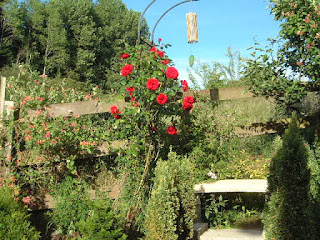.jpg) I still have to learn what they all are and how to deal with them. And I'm sure that that will involve tree surgeons and the like, of which the local council publishes a list.
I still have to learn what they all are and how to deal with them. And I'm sure that that will involve tree surgeons and the like, of which the local council publishes a list.
There isn't a single plant in my little garden (always excepting the ever-encroaching brambles) that I haven't planted myself during the past twenty-five years - the lovely Elaeagnus that grows as fast as the brambles but gives beautiful green and gold foliage all year round, the fragrant Viburnum and my gorgeous Dublin Bay rose.
And, of course, the apple tree.
In My Day
At the tail end of 1986 we moved into our new home. Once we'd got the central heating more or less sorted, found a way of fitting Becky and her toys into her tiny bedroom and finally got the cooker wedged into place, it was time to explore the rest of our property.
The property boasted an integral garage, a joy previously untasted. It had an ancient up-and-over door which was unlocked, the key probably having been missing for years. We peered into the depths. There was some of our stuff in there, dumped by the removal firm and that general air of dust and spiders that pervades most outbuildings.
Near the front was something unexpected. Sitting lopsidedly in a Safeway's carrier bag was a diminutive apple tree. The label announced that it was a Worcester and was self-germinating. Nothing, however, announced how it had got there. Still there it was and I carefully planted it at the top of the garden, much to the delight of my neighbour who also had a Worcester apple tree.
Later the whole story emerged. The new house was only a matter of about three miles from my brother David's home. Thinking to welcome us festively they turned up, mob-handed, on December 23rd, our moving-in day. They had all the musical instruments they could muster and the apple tree. Lustily they sang and played carols outside our front door. We, however, were at the time feasting on cauliflower cheese at Cousin's restaurant in Shepton (see 28 March 2012 entry). Eventually they became aware of the deafening silence that surrounded them. They packed up their instruments and carol books and tiptoed away, leaving the apple tree in the garage.
That first year the tree produced four apples, which I made into a tarte tatin to share with my loving brother's family.
Unfortunately, I fear that uprooting the tree to take it to Oakhill will just kill it, so it will have to stay as a symbol of welcome and hope to the future inhabitants of no 7.
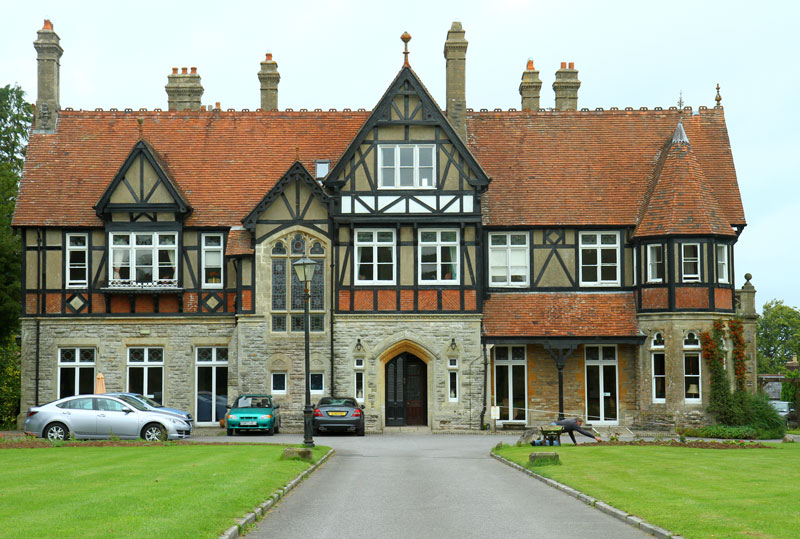
.jpg) I still have to learn what they all are and how to deal with them. And I'm sure that that will involve tree surgeons and the like, of which the local council publishes a list.
I still have to learn what they all are and how to deal with them. And I'm sure that that will involve tree surgeons and the like, of which the local council publishes a list.There isn't a single plant in my little garden (always excepting the ever-encroaching brambles) that I haven't planted myself during the past twenty-five years - the lovely Elaeagnus that grows as fast as the brambles but gives beautiful green and gold foliage all year round, the fragrant Viburnum and my gorgeous Dublin Bay rose.
And, of course, the apple tree.
In My Day
At the tail end of 1986 we moved into our new home. Once we'd got the central heating more or less sorted, found a way of fitting Becky and her toys into her tiny bedroom and finally got the cooker wedged into place, it was time to explore the rest of our property.
The property boasted an integral garage, a joy previously untasted. It had an ancient up-and-over door which was unlocked, the key probably having been missing for years. We peered into the depths. There was some of our stuff in there, dumped by the removal firm and that general air of dust and spiders that pervades most outbuildings.
Near the front was something unexpected. Sitting lopsidedly in a Safeway's carrier bag was a diminutive apple tree. The label announced that it was a Worcester and was self-germinating. Nothing, however, announced how it had got there. Still there it was and I carefully planted it at the top of the garden, much to the delight of my neighbour who also had a Worcester apple tree.
Later the whole story emerged. The new house was only a matter of about three miles from my brother David's home. Thinking to welcome us festively they turned up, mob-handed, on December 23rd, our moving-in day. They had all the musical instruments they could muster and the apple tree. Lustily they sang and played carols outside our front door. We, however, were at the time feasting on cauliflower cheese at Cousin's restaurant in Shepton (see 28 March 2012 entry). Eventually they became aware of the deafening silence that surrounded them. They packed up their instruments and carol books and tiptoed away, leaving the apple tree in the garage.
That first year the tree produced four apples, which I made into a tarte tatin to share with my loving brother's family.
Unfortunately, I fear that uprooting the tree to take it to Oakhill will just kill it, so it will have to stay as a symbol of welcome and hope to the future inhabitants of no 7.
Thursday, April 12, 2012
Grubby
Today
Maybe it's because I cleaned my specs today or maybe it's the spring sunshine, but I've been noticing griminess today. The shower head was clogged with lime that had become rather grubby-looking, there was old tea ingrained into the teapot stand and the microwave plate looked far from clean. The morning sunshine revealed how smeared the windows are.
So I rubbed away, reflecting on just how much dirt we don't really notice.
In My Day
Growing up in London, I think I believed that dirt was actually simply a result of age. It didn't really occur to me to think that all dirt is caused by something.
The blackened buildings in London were just old, as was our ceiling at 4BH with its yellowy-brown stains. Dust also just appeared; it was made of nothing specific. This was quite a comfortable way of looking at things; the bottoms of saucepans weren't black from repeated exposure to flames and spilt food, they were just old.
As I grew up I began to see things differently. For one thing, the clean air act of 1963 relegated the London Smogs to the history books and I began to understand that the "age" on buildings was actually ingrained soot from millions of coal fires, couple with rain. Buildings were cleaned up, often revealing their full beauty for the first time in a hundred and fifty years. When I visited Mdina in Malta a few years ago the buildings, which are mostly much older than London's, were a lovely golden, never having had to deal with soot or much rain.
But still sometimes dirt builds up so slowly that we are not aware. Mamma was a forty Craven A a day smoker and I truly think she was unaware of how dirty this made everything. When she lived at Dorking she had a problem with foundations that meant that all her furniture had to be stored. Paul and I helped to put it all back.
"This TV's pretty grubby, Mamma", I said. Mamma protested that she'd dusted it before it had gone into store. "Well", I said, demonstrating with a soapy cloth "it's covered in a brown sticky film, I'm surprised you could watch TV; it must have been sepia!" Her books, too, all had yellowed spines. In vain for her to protest that that was the effect of age. "I have books that are much older", I said, exasperated "and they're not yellowed. It's tar from your cigarettes." But she wasn't convinced.
What is true is that no amount of scrubbing will ever remove all the grubbiness of living, although I presently have a very shiny bathroom.
Maybe it's because I cleaned my specs today or maybe it's the spring sunshine, but I've been noticing griminess today. The shower head was clogged with lime that had become rather grubby-looking, there was old tea ingrained into the teapot stand and the microwave plate looked far from clean. The morning sunshine revealed how smeared the windows are.
So I rubbed away, reflecting on just how much dirt we don't really notice.
In My Day
Growing up in London, I think I believed that dirt was actually simply a result of age. It didn't really occur to me to think that all dirt is caused by something.
The blackened buildings in London were just old, as was our ceiling at 4BH with its yellowy-brown stains. Dust also just appeared; it was made of nothing specific. This was quite a comfortable way of looking at things; the bottoms of saucepans weren't black from repeated exposure to flames and spilt food, they were just old.
As I grew up I began to see things differently. For one thing, the clean air act of 1963 relegated the London Smogs to the history books and I began to understand that the "age" on buildings was actually ingrained soot from millions of coal fires, couple with rain. Buildings were cleaned up, often revealing their full beauty for the first time in a hundred and fifty years. When I visited Mdina in Malta a few years ago the buildings, which are mostly much older than London's, were a lovely golden, never having had to deal with soot or much rain.
But still sometimes dirt builds up so slowly that we are not aware. Mamma was a forty Craven A a day smoker and I truly think she was unaware of how dirty this made everything. When she lived at Dorking she had a problem with foundations that meant that all her furniture had to be stored. Paul and I helped to put it all back.
"This TV's pretty grubby, Mamma", I said. Mamma protested that she'd dusted it before it had gone into store. "Well", I said, demonstrating with a soapy cloth "it's covered in a brown sticky film, I'm surprised you could watch TV; it must have been sepia!" Her books, too, all had yellowed spines. In vain for her to protest that that was the effect of age. "I have books that are much older", I said, exasperated "and they're not yellowed. It's tar from your cigarettes." But she wasn't convinced.
What is true is that no amount of scrubbing will ever remove all the grubbiness of living, although I presently have a very shiny bathroom.
Tuesday, April 10, 2012
Potty
Today
I had what can only be described as a "funny turn" last Sunday. The borders between reality and imagination seemed to be blurred and I wasn't at all sure whether things that were so important to remember had really happened or only been in a dream.
This strange sensation was followed by a night in which closing my eyes brought forth a series of bizarre, unconnected and sometimes unpleasant images that crowded the backs of my eyelids.
The sensible thing seemed to be to keep them open which I did until about three AM when at last closing my eyes brought merely greyness followed by sleep.
I feel fine now and can only assume that it was as a result of recent overload. I decided to try to get my life into better balance.
But the truth is, when you're in your 60s, episodes like this can trigger the fear that, actually, you're showing the first signs of going into old-age pottiness.
In My Day
Paul's mother and grandmother lived well into their 90s and both were pretty demented towards the end.
With Nan this was fairly clearly Alzheimer's with episodes of confusion, forgetfulness and rage. This was not helped by a liking for more than a little tipple. More than once Paul had to help Mum and Dad as they struggled to heave the resisting Nan into a chair or out of a cold bath.
Eventually, Nan reached the tipping point when Mum and Dad felt they had to have a break and arranged for respite care for Nan. I don't think she ever came home after that and the last few years of her life were spent in a clouded twilight.
Although Mum did slide into dementia in the last couple of years of her life there was none of the anger, incontinence, inability to eat etc that mark out proper Alzheimer's. Instead she allowed herself a gradual giving up of responsibilities. Paul's sister was always on hand and Paul called her daily to check she was OK and she had help in the way of cleaners and carers who visited.
It was only about a year before she died when her grandson was shocked to find her wandering about her flat with the gas grill on full, but not lit and her with a box of matches. It was clear that Mum had reached the point when she needed expert help.
Did she know this? She was pretty accepting of anything Paul told her was a Good Thing and she didn't seem to mind the residential care home. I am of the opinion that Mum was not just preparing herself for the slide out of life but also her children. It's easier to say goodbye when your mother no longer seems to recognise you and only shows a fondness for strawberries and chocolate buttons. She's not seen as losing anything and you are losing less than if she'd still been feisty with everything to live for.
I'm not ready for any kind of slide just yet and feel sure that, at the moment at least, I'm not at all potty.
I had what can only be described as a "funny turn" last Sunday. The borders between reality and imagination seemed to be blurred and I wasn't at all sure whether things that were so important to remember had really happened or only been in a dream.
This strange sensation was followed by a night in which closing my eyes brought forth a series of bizarre, unconnected and sometimes unpleasant images that crowded the backs of my eyelids.
The sensible thing seemed to be to keep them open which I did until about three AM when at last closing my eyes brought merely greyness followed by sleep.
I feel fine now and can only assume that it was as a result of recent overload. I decided to try to get my life into better balance.
But the truth is, when you're in your 60s, episodes like this can trigger the fear that, actually, you're showing the first signs of going into old-age pottiness.
In My Day
Paul's mother and grandmother lived well into their 90s and both were pretty demented towards the end.
With Nan this was fairly clearly Alzheimer's with episodes of confusion, forgetfulness and rage. This was not helped by a liking for more than a little tipple. More than once Paul had to help Mum and Dad as they struggled to heave the resisting Nan into a chair or out of a cold bath.
Eventually, Nan reached the tipping point when Mum and Dad felt they had to have a break and arranged for respite care for Nan. I don't think she ever came home after that and the last few years of her life were spent in a clouded twilight.
Although Mum did slide into dementia in the last couple of years of her life there was none of the anger, incontinence, inability to eat etc that mark out proper Alzheimer's. Instead she allowed herself a gradual giving up of responsibilities. Paul's sister was always on hand and Paul called her daily to check she was OK and she had help in the way of cleaners and carers who visited.
It was only about a year before she died when her grandson was shocked to find her wandering about her flat with the gas grill on full, but not lit and her with a box of matches. It was clear that Mum had reached the point when she needed expert help.
Did she know this? She was pretty accepting of anything Paul told her was a Good Thing and she didn't seem to mind the residential care home. I am of the opinion that Mum was not just preparing herself for the slide out of life but also her children. It's easier to say goodbye when your mother no longer seems to recognise you and only shows a fondness for strawberries and chocolate buttons. She's not seen as losing anything and you are losing less than if she'd still been feisty with everything to live for.
I'm not ready for any kind of slide just yet and feel sure that, at the moment at least, I'm not at all potty.
Friday, April 06, 2012
Hello, Kitty
Today
My niece, who openly regards herself as "mother" to her spaniels has rather fallen in love with some cats she's caring for. She wondered if she could ensure that her dogs wouldn't eat the kittens if she got any.
"The only dogs," I informed her, knowledgeably "that eat cats are Jack Russells and Lurchers."
In My Day
Caspian the dog had been taught early on to treat cats with the greatest of respect and caution. In 1993 the old cats died and we acquired Amadeus and Arietty.
I spoke sternly to Cas. "We're getting some kittens; you harm them and it's back to the RSPCA where you came from!" He laid his head on my lap and gave me that "don't you love me any more?" gaze that dogs do so well.
He was used to cats ignoring him and slapping him; what he didn't expect was a cat who adored him. Amadeus was a smart little black-and-white who had been reared in a farm cottage where dogs ran in and out all the time.
As soon as he saw Cas he ran over to him. Cas braced for impact. Instead Amadeus got onto his hind legs and wrapped his paws around Cas's nose, pulling it down to his level so that he could kiss him. Caspian was dumbfounded and just let him do this. On one occasion, Cas gave a huge yawn and Amadeus put his head inside the dog's mouth to have a look around. Cas simply stood there with his jaw uncomfortably locked open until the kitten withdrew his head.
Later, he allowed the kitten to eat his food (Amadeus would dart between his paws as he stood over his food bowl and just tuck in) and to use him as a sofa. Many a morning we would find Cas hunched up in the corner of his kennel while the cat sprawled luxuriously in the bed.
Once or twice he growled slightly when the kitten's playing with his tail threatened to become actually painful. I think that was more a call to us to remove the kitty, rather than a threat to Amadeus, because he never once hurt or attacked the kittens.
And I think Spaniels are in general a good tempered breed; so why don't you go for it, Sarah?
My niece, who openly regards herself as "mother" to her spaniels has rather fallen in love with some cats she's caring for. She wondered if she could ensure that her dogs wouldn't eat the kittens if she got any.
"The only dogs," I informed her, knowledgeably "that eat cats are Jack Russells and Lurchers."
In My Day
Caspian the dog had been taught early on to treat cats with the greatest of respect and caution. In 1993 the old cats died and we acquired Amadeus and Arietty.
I spoke sternly to Cas. "We're getting some kittens; you harm them and it's back to the RSPCA where you came from!" He laid his head on my lap and gave me that "don't you love me any more?" gaze that dogs do so well.
He was used to cats ignoring him and slapping him; what he didn't expect was a cat who adored him. Amadeus was a smart little black-and-white who had been reared in a farm cottage where dogs ran in and out all the time.
As soon as he saw Cas he ran over to him. Cas braced for impact. Instead Amadeus got onto his hind legs and wrapped his paws around Cas's nose, pulling it down to his level so that he could kiss him. Caspian was dumbfounded and just let him do this. On one occasion, Cas gave a huge yawn and Amadeus put his head inside the dog's mouth to have a look around. Cas simply stood there with his jaw uncomfortably locked open until the kitten withdrew his head.
Later, he allowed the kitten to eat his food (Amadeus would dart between his paws as he stood over his food bowl and just tuck in) and to use him as a sofa. Many a morning we would find Cas hunched up in the corner of his kennel while the cat sprawled luxuriously in the bed.
Once or twice he growled slightly when the kitten's playing with his tail threatened to become actually painful. I think that was more a call to us to remove the kitty, rather than a threat to Amadeus, because he never once hurt or attacked the kittens.
And I think Spaniels are in general a good tempered breed; so why don't you go for it, Sarah?
Saturday, March 31, 2012
Feline Felicity
Today
The next stage in the new home purchase has been reached and we are beginning to make proper plans.
While we have the luxury of not having to move out of here before moving into Spencer House, there will still be a day or two of activity involving removal trucks and strangers stomping about carting furniture.
So, thinking about Abby's happiness, we've decided she'll be best off in the cattery for a couple of days during the worst of it. Then we can settle her more easily into her new environment.
In My Day
Of course, we haven't always had either the option of having staged moving or of being able to afford a cattery.
When we moved to Montfort Close in 1982, I couldn't even find the cat basket and a terrified Amelia tore the cardboard cat box to shreds in minutes. I seem to remember moving them in a unibox with a board over the top to prevent egress. Fortunately the journey was only about five miles so it wasn't too difficult.
When we arrived. Amelia quite quickly set about exploring, but Agamemnon was simply furious and wouldn't leave the utility room where he slept uncomfortably on some dismantled metal shelving and forced us to give him a litter tray. After five days I'd had enough of this sulky behaviour. He was eating normally, wasn't he? So this was just a mind game which I was determined to win. In was high summer and I chucked him into the garden, where he found that it was much more fun than the pocket-handkerchief he was used and promptly forgot his bad temper in the fun of climbing up trees.
Moving here was far worse. There was a lengthy period when we were homeless, staying with Chris at Glenthorne. As this was a home that boasted three German Shepherd dogs we clearly had to accommodate the animals in a local kennel/cattery. The cats (and Caspian the dog) were there for eight long weeks. We visited them a few times and they looked so miserable. When we were eventually reunited there was no sulking. They were all far too delighted to have found us again and to have their freedom.
It's fine, Abby, you'll be just fine. Altho' I think a new collar with address tag might be in order, just in case.
The next stage in the new home purchase has been reached and we are beginning to make proper plans.
While we have the luxury of not having to move out of here before moving into Spencer House, there will still be a day or two of activity involving removal trucks and strangers stomping about carting furniture.
So, thinking about Abby's happiness, we've decided she'll be best off in the cattery for a couple of days during the worst of it. Then we can settle her more easily into her new environment.
In My Day
Of course, we haven't always had either the option of having staged moving or of being able to afford a cattery.
When we moved to Montfort Close in 1982, I couldn't even find the cat basket and a terrified Amelia tore the cardboard cat box to shreds in minutes. I seem to remember moving them in a unibox with a board over the top to prevent egress. Fortunately the journey was only about five miles so it wasn't too difficult.
When we arrived. Amelia quite quickly set about exploring, but Agamemnon was simply furious and wouldn't leave the utility room where he slept uncomfortably on some dismantled metal shelving and forced us to give him a litter tray. After five days I'd had enough of this sulky behaviour. He was eating normally, wasn't he? So this was just a mind game which I was determined to win. In was high summer and I chucked him into the garden, where he found that it was much more fun than the pocket-handkerchief he was used and promptly forgot his bad temper in the fun of climbing up trees.
Moving here was far worse. There was a lengthy period when we were homeless, staying with Chris at Glenthorne. As this was a home that boasted three German Shepherd dogs we clearly had to accommodate the animals in a local kennel/cattery. The cats (and Caspian the dog) were there for eight long weeks. We visited them a few times and they looked so miserable. When we were eventually reunited there was no sulking. They were all far too delighted to have found us again and to have their freedom.
It's fine, Abby, you'll be just fine. Altho' I think a new collar with address tag might be in order, just in case.
Wednesday, March 28, 2012
Comfort Food
Today
I've just made that old veggie stand-by, cauliflower cheese, for supper. Very good it was too.
And it's a great comfort food.
In My Day
With a mixture of hope and anxiety we moved into 7 Mead Close on 23 December 1986. The weather was dull and droopy and I couldn't figure out how to get the central heating working. My new neighbour, up to her floury elbows in mincepie making, promised that her husband would come over and explain it all later.
I went back to check that all the furniture was roughly in the right place. As Stoke at that time was a gas-free village I'd had to leave my nearly new gas cooker behind and had bought in the sales a top of the range halogen ceramic hob cooker. This had been faithfully delivered but was too large to fit into the space allocated for cookers in my new kitchen. I couldn't even heat up soup.
This felt like some kind of final straw. Here we were, embarking on a new life, and it seemed to be going wrong in a chilly and dull kind of way. I bucked myself up and when Paul came home we all flossied ourselves up and piled into the car to see what Shepton Mallet could offer in the way of supper.
After walking rather hopelessly up the Main Street (where I fell over on the cobbles) we discovered Cousin's Restaurant just opposite the police station. It didn't look too prepossessing but we were cold and hungry and went in.
Veggie food they did not do, but they did offer cauliflower cheese. Seeing that Becky's eyes glistened as they brought a dish in, they fetched another larger one just for her and piles of very good chips.
Suddenly, everything seemed a little better as we worked our way through the tasty veg. We went home and my neighbour turned up and fixed the heating as promised and the house slowly warmed up. Maybe it was going to be all right after all.
Talking to Lizzie the other day about that evening her main memory seemed to be the cauliflower cheese. Comfort food, indeed.
I've just made that old veggie stand-by, cauliflower cheese, for supper. Very good it was too.
And it's a great comfort food.
In My Day
With a mixture of hope and anxiety we moved into 7 Mead Close on 23 December 1986. The weather was dull and droopy and I couldn't figure out how to get the central heating working. My new neighbour, up to her floury elbows in mincepie making, promised that her husband would come over and explain it all later.
I went back to check that all the furniture was roughly in the right place. As Stoke at that time was a gas-free village I'd had to leave my nearly new gas cooker behind and had bought in the sales a top of the range halogen ceramic hob cooker. This had been faithfully delivered but was too large to fit into the space allocated for cookers in my new kitchen. I couldn't even heat up soup.
This felt like some kind of final straw. Here we were, embarking on a new life, and it seemed to be going wrong in a chilly and dull kind of way. I bucked myself up and when Paul came home we all flossied ourselves up and piled into the car to see what Shepton Mallet could offer in the way of supper.
After walking rather hopelessly up the Main Street (where I fell over on the cobbles) we discovered Cousin's Restaurant just opposite the police station. It didn't look too prepossessing but we were cold and hungry and went in.
Veggie food they did not do, but they did offer cauliflower cheese. Seeing that Becky's eyes glistened as they brought a dish in, they fetched another larger one just for her and piles of very good chips.
Suddenly, everything seemed a little better as we worked our way through the tasty veg. We went home and my neighbour turned up and fixed the heating as promised and the house slowly warmed up. Maybe it was going to be all right after all.
Talking to Lizzie the other day about that evening her main memory seemed to be the cauliflower cheese. Comfort food, indeed.
Monday, March 26, 2012
A Whole World Away
Today
Paul and I have recently returned from our South and Central American holiday. We visited Chile, Argentina, Uruguay, Colombia and Honduras.
My brother Chris prefers the world's wilder places as destinations because he thinks that all cities are pretty much the same, and in fact in Chile, Argentina and Uruguay the cities had so much in common with Europe that we hardly felt we were abroad.
We didn't feel like this in Tegucigalpa. What with armed guards at every supermarket and cafe, the necessity for even well-to-do families to have their water delivered twice weekly, and the injunction not to enter into the city wearing anything resembling jewellery, we felt we were stepping into an alien place.
My Honduran cousin Ernesto pointed out to me rather tartly that most of the world lives the same way or worse than Honduras; the way we live in Western Europe being reserved for a very small and privileged sector of the human race.
In My Day
When did foreign places stop feeling foreign? Was it as a result of our desire to travel without being inconvenienced by the strange? Or are we simply all subject to globalisation?
When I did my great hitch-hiking tour back in 1969 many places even on mainland Europe did feel very foreign indeed. There were not the ubiquitous fast-food chains in every city, nor were there supermarkets selling roughly the same food everywhere.
This made for an experience that was unsettling, challenging and exciting. In Florence we tasted Pizza for the first time; bought from local pizzerias in large square slabs. In Athens we bought Souvlaki from roadside stalls - full of fresh tomatoes and flat-leaved parsley. Even eating parsley, usually at that time in England a throw-away garnish, was new. Plumbing was different and we became accustomed to the hole-in-the-floor variety. And, of course, you took your life in your hands if you drank the water!
When we arrived in Crete, courtesy of an overnight tramp ferry from Piraeus, the difference was even more marked. Crete is now a playground for holidaying Brits and bristles with high-rise and Macdonalds. Then it was a dusty, forgotten corner of Greece. One day, eating our lunch and awaiting our bus to Matala, we were invited into a little local cafe. It was dark, dingy and pretty well empty. The owners offered us a bottle of local red wine to go with our sandwiches, indicating that it was on the house. As we finished, music started up and we were drawn into a circle of dancing locals, where they kicked up their heels in true Greek fashion. When we got to Matala we found that the local cafe did amazing omelettes for a few Drachma and had no objection if we took in tomatoes and onions bought in the market to slice over them. We often brought in our own wine as well. People picking over fruit for sale in the market place would offer us bunches of grapes as gifts.
And we slept on the beach or in the artificial caves without hindrance or fear.
I seriously doubt that that would happen today; Matala boasts luxury hotels and restaurants whose owners would be much too keen on their profits and too used to foreigners to spend time on a Sunday, leisurely picking over grapes and handing them out to hippies.
I'm in a poor position to judge whether what is gained by adopting the Western European way of life is greater than what is lost. Perhaps it's possible to have potable water without adopting global blandness. I hope so.
Paul and I have recently returned from our South and Central American holiday. We visited Chile, Argentina, Uruguay, Colombia and Honduras.
My brother Chris prefers the world's wilder places as destinations because he thinks that all cities are pretty much the same, and in fact in Chile, Argentina and Uruguay the cities had so much in common with Europe that we hardly felt we were abroad.
We didn't feel like this in Tegucigalpa. What with armed guards at every supermarket and cafe, the necessity for even well-to-do families to have their water delivered twice weekly, and the injunction not to enter into the city wearing anything resembling jewellery, we felt we were stepping into an alien place.
My Honduran cousin Ernesto pointed out to me rather tartly that most of the world lives the same way or worse than Honduras; the way we live in Western Europe being reserved for a very small and privileged sector of the human race.
In My Day
When did foreign places stop feeling foreign? Was it as a result of our desire to travel without being inconvenienced by the strange? Or are we simply all subject to globalisation?
When I did my great hitch-hiking tour back in 1969 many places even on mainland Europe did feel very foreign indeed. There were not the ubiquitous fast-food chains in every city, nor were there supermarkets selling roughly the same food everywhere.
This made for an experience that was unsettling, challenging and exciting. In Florence we tasted Pizza for the first time; bought from local pizzerias in large square slabs. In Athens we bought Souvlaki from roadside stalls - full of fresh tomatoes and flat-leaved parsley. Even eating parsley, usually at that time in England a throw-away garnish, was new. Plumbing was different and we became accustomed to the hole-in-the-floor variety. And, of course, you took your life in your hands if you drank the water!
When we arrived in Crete, courtesy of an overnight tramp ferry from Piraeus, the difference was even more marked. Crete is now a playground for holidaying Brits and bristles with high-rise and Macdonalds. Then it was a dusty, forgotten corner of Greece. One day, eating our lunch and awaiting our bus to Matala, we were invited into a little local cafe. It was dark, dingy and pretty well empty. The owners offered us a bottle of local red wine to go with our sandwiches, indicating that it was on the house. As we finished, music started up and we were drawn into a circle of dancing locals, where they kicked up their heels in true Greek fashion. When we got to Matala we found that the local cafe did amazing omelettes for a few Drachma and had no objection if we took in tomatoes and onions bought in the market to slice over them. We often brought in our own wine as well. People picking over fruit for sale in the market place would offer us bunches of grapes as gifts.
And we slept on the beach or in the artificial caves without hindrance or fear.
I seriously doubt that that would happen today; Matala boasts luxury hotels and restaurants whose owners would be much too keen on their profits and too used to foreigners to spend time on a Sunday, leisurely picking over grapes and handing them out to hippies.
I'm in a poor position to judge whether what is gained by adopting the Western European way of life is greater than what is lost. Perhaps it's possible to have potable water without adopting global blandness. I hope so.
Friday, March 23, 2012
A House is not a Home
Today
 After much agonising and searching, we have settled on the house we want to buy. It's called Spencer House and is in Oakhill, a village about two miles away. It's a very gracious house and offers all the accommodation we need.
However, I can't help feeling anxious; we have lived here at No 7 for over twenty-five years and I find myself worrying about the new location, the unknown night-noises and how long it will be before it becomes our home.
In My Day
I can't say that our first glimpse of 7 Mead Close in 1986 gave us the tingle factor. We had come to Somerset to follow up the opportunity at Flare, and needed somewhere to live. The weather seemed persistently gloomy and the house rather dreary. The carpets were dingy and of an awful design; decorations were scruffy and the whole house was cold with a heating system out of the ark, whose peculiarities required much effort to unravel. It was, however, within our limited budget.
There were barely three bedrooms and Becky was stuffed into a tiny room over the stairs and we had to take the door off to give her some floor space.
It was a long time before we could start to do any work. I was driving all over the country for my job and weekends represented recovery with little time for decoration and remodelling. The isolation of the village meant that we spent much time driving the girls to various places and we had little cash to spare.
Over the years we gradually turned the space into somewhere that was truly ours. As soon we could afford it the old heating system was replaced and we fitted a proper fireplace. The house was extended and we grew to love its calmness and the surroundings of the Close.
Quietly and in its own time no 7 became a home.
I'm sure that we are doing the right thing; it's just that we have to allow ourselves the time to make Spencer House as much truly our home.
 After much agonising and searching, we have settled on the house we want to buy. It's called Spencer House and is in Oakhill, a village about two miles away. It's a very gracious house and offers all the accommodation we need.
However, I can't help feeling anxious; we have lived here at No 7 for over twenty-five years and I find myself worrying about the new location, the unknown night-noises and how long it will be before it becomes our home.
In My Day
I can't say that our first glimpse of 7 Mead Close in 1986 gave us the tingle factor. We had come to Somerset to follow up the opportunity at Flare, and needed somewhere to live. The weather seemed persistently gloomy and the house rather dreary. The carpets were dingy and of an awful design; decorations were scruffy and the whole house was cold with a heating system out of the ark, whose peculiarities required much effort to unravel. It was, however, within our limited budget.
There were barely three bedrooms and Becky was stuffed into a tiny room over the stairs and we had to take the door off to give her some floor space.
It was a long time before we could start to do any work. I was driving all over the country for my job and weekends represented recovery with little time for decoration and remodelling. The isolation of the village meant that we spent much time driving the girls to various places and we had little cash to spare.
Over the years we gradually turned the space into somewhere that was truly ours. As soon we could afford it the old heating system was replaced and we fitted a proper fireplace. The house was extended and we grew to love its calmness and the surroundings of the Close.
Quietly and in its own time no 7 became a home.
I'm sure that we are doing the right thing; it's just that we have to allow ourselves the time to make Spencer House as much truly our home.
Subscribe to:
Posts (Atom)